Key takeaways
- 1Dry needling uses thin, solid, single-use needles placed into tight bands of muscle, often called trigger points, to help them release. “Dry” simply means nothing is injected.
- 2It’s most often used for muscle-related pain in the neck, shoulders, upper back, low back, and hips, usually as one part of a broader plan.
- 3Mild soreness for a day or two is common. Serious problems are rare, and careful technique and screening keep them that way.
- 4Dry needling and acupuncture use similar needles but different reasoning: dry needling is based on muscle anatomy and trigger points, while traditional acupuncture is based on meridians and points from Chinese medicine.
If someone has suggested dry needling for a stubborn knot in your shoulder or a back that won’t loosen up, you probably have questions. What is dry needling, exactly? Does it hurt? Is it acupuncture? Here’s a plain-English guide, including what it can and can’t do.
The short answer
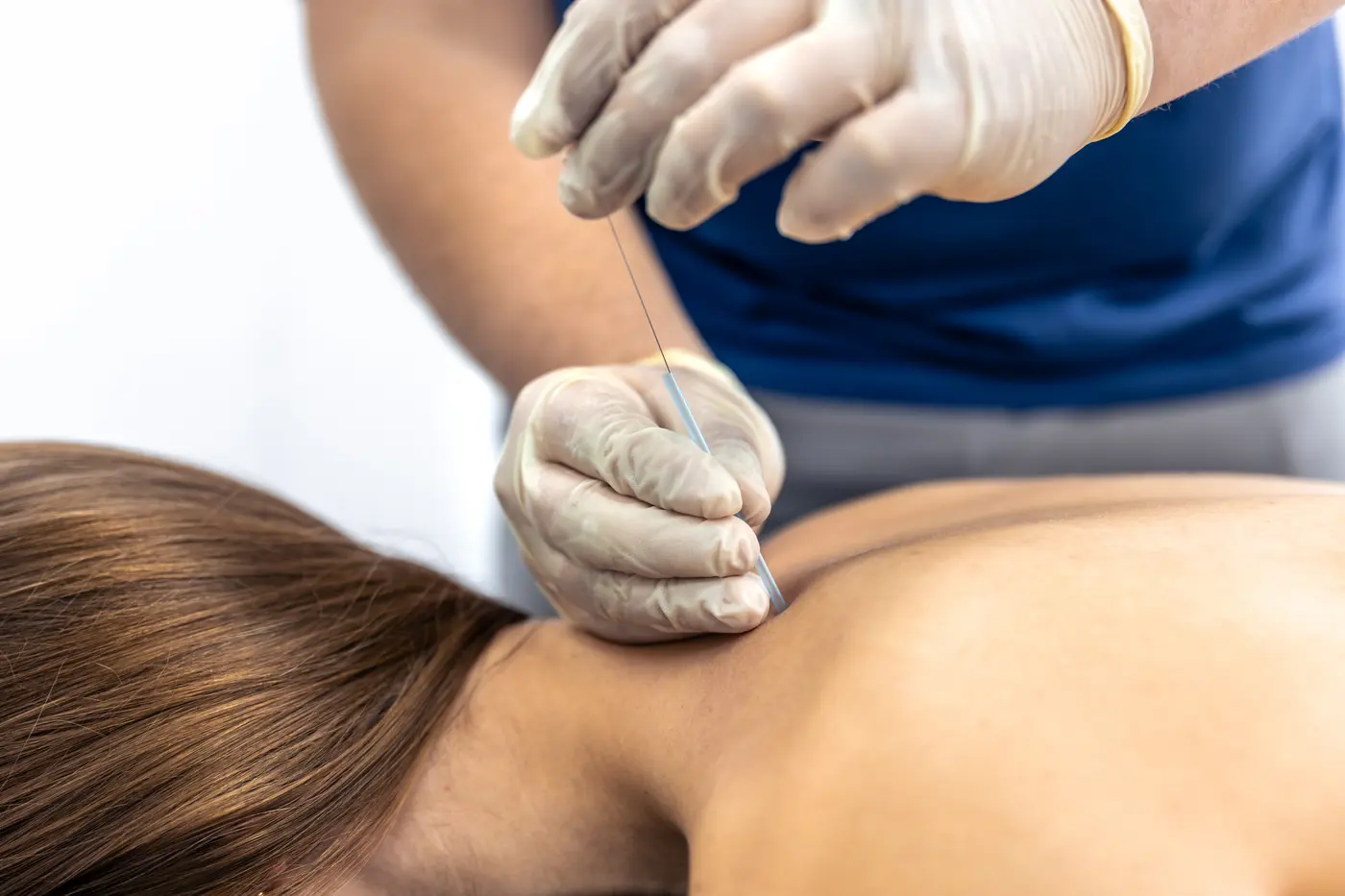
Dry needling is a treatment where a provider places very thin, solid needles into tight, tender bands of muscle to help them relax. Those tight spots are often called trigger points. The word “dry” just means the needle doesn’t inject anything, unlike a shot of medication. It’s typically one part of a plan that also includes adjustments, stretching, and exercise.
What a trigger point is
A trigger point is a small, sensitive area in a band of muscle that feels like a knot under your fingers. Pressing on it can cause local pain and sometimes pain that shows up somewhere else, which is called referred pain. A trigger point in the upper shoulder, for example, can send an ache up the side of the neck and into the head.
Trigger points tend to form in muscles that are overworked, held in one position for a long time, or guarding an irritated joint. Long days at a desk, heavy lifting, poor sleep positions, and old injuries are common contributors. That’s why they show up so often alongside tech neck and pain between the shoulder blades.
How dry needling is thought to work
Researchers are still working out the exact mechanisms, and we’d rather be honest about that. The leading explanations are that the needle:
- Triggers a quick, involuntary twitch in the tight band, after which the muscle often relaxes.
- Changes how nerves in the area send pain signals, which can turn down sensitivity.
- Improves local blood flow to an area that has been tight and guarded.
Studies suggest dry needling can reduce muscle-related pain in the short term, especially in the neck, shoulders, and low back. Results tend to be best when it’s combined with movement and exercise rather than used on its own.
What a session feels like
- We review your history and examine the area to find the tight bands that are driving your pain.
- The skin is cleaned, and a sterile, single-use needle is placed through a small guide tube.
- The needle is gently moved or left in place for a short time. You may feel a deep ache, a brief cramp, or a twitch.
- Needles are removed and safely discarded, and the area may be stretched or treated with heat or soft-tissue work.
Most people are surprised by how little they feel going in. The twitch can feel odd the first time, but it’s usually a sign we’ve found the right spot. Some patients pair needling with electrical stimulation or other soft-tissue techniques, depending on what their body responds to best.
Dry needling vs acupuncture
The needles look the same, which is why the two get confused. The difference is in the reasoning behind where they go:
- Dry needling is based on Western anatomy. Needles go into specific tight bands of muscle that we find on exam.
- Traditional acupuncture comes from Chinese medicine. Needles are placed at points along meridians, which may be far from where you hurt.
- Both are used for pain relief, and some modern acupuncture overlaps with trigger-point work.
Neither is a cure-all. The best choice depends on your problem and what you’re comfortable with, and we’ll talk through it with you.
Side effects and safety
Dry needling is low risk when it’s done carefully with sterile, single-use needles. Common, temporary effects include soreness for a day or two, small bruises, minor bleeding at the needle site, and feeling tired or light-headed afterward. Serious complications are rare. The most important one is a collapsed lung when needling near the chest wall, which is why technique and depth around the upper back and shoulders matter so much.
Who it helps most
Dry needling tends to be most useful when tight muscles are a big part of the problem, for example with neck and shoulder tension, headaches that start in the neck, upper back pain, low back and hip tightness, and some sports injuries. It isn’t the right tool for every kind of pain, and it isn’t a substitute for a proper diagnosis.
The bottom line
Dry needling is a precise way to release tight, tender muscles, and it often works best alongside adjustments and exercise. It’s generally safe, mild soreness is normal, and you’re always in control of whether and where it’s used. If you live in Franconia, Kingstowne, Springfield, or anywhere near Alexandria, see our services page or request an appointment.
This article is for general education and isn’t a diagnosis. If you’re in pain, get evaluated.
Frequently asked questions
Does dry needling hurt?
Most people feel very little as the needle goes in, because the needles are extremely thin. When the needle reaches a tight spot, you may feel a deep ache, a brief cramp, or a small twitch in the muscle. That sensation usually passes quickly, and you can ask us to stop at any time.
How long does soreness last after dry needling?
Many people feel sore in the treated area for 24 to 48 hours, a bit like after a hard workout. Gentle movement, heat, and staying hydrated usually help. Small bruises can also happen. Soreness that gets worse instead of better should be reported to us.
How many dry needling sessions will I need?
It varies with the problem. Some people notice a difference after one or two visits, while longer-standing muscle pain may take several sessions combined with adjustments and exercise. We re-check your progress regularly and won’t keep needling if it isn’t helping.
Is dry needling the same as acupuncture?
No, although the needles look alike. Dry needling targets specific tight areas in muscle based on modern anatomy. Traditional acupuncture places needles along meridians according to Chinese medicine principles. Both are used for pain, and some providers draw on both.
Who shouldn’t have dry needling?
Tell us if you have a strong fear of needles, a bleeding disorder, take blood thinners, are pregnant, have a weakened immune system, have lymphedema, or have a skin infection in the area. These don’t always rule it out, but they change how, where, or whether we use it.